jet·tracker
  • Jet CRMNEW
  • Pricing
  • Home
  • Explore
  • Radar
  • Me
jet·tracker

The intelligence terminal for Brazilian executive aviation. An independent platform, fleet, market and official data in one place.

Create free account→

Jet Hub

  • Showroom
  • Aircraft Catalog
  • Range Map
  • Comparison
  • Value your aircraft

Jet Radar

  • Live fleet
  • Flight intelligence
  • Flight Radar

Analytics

  • Blog
  • Reports
  • Overview
  • Owners
  • Operators
  • Tradings & Importers
  • MRO
  • Airports
  • Parts & Materials
  • Air Taxi
  • Fractional
  • Changelog

Account

  • Pricing
  • API and MCP (developers)
  • Create free account
  • Sign in

Data (RAB/ANAC, FAA, Brazilian Federal Revenue, marketplaces) and the editorial curation of specs may contain errors, lag or approximations. ADS-B-derived positions and airports have partial coverage, and estimates, inferences and AI responses are approximations, they are not advice or an appraisal. Verify with primary sources before any decision. See the Terms.

© 2026 Jet Tracker·Made in Brazil 🇧🇷
TermsPrivacyLGPDSupportData sources
/
/
Skip to content
  1. Home
  2. /
  3. Models
  4. /
  5. Twin Commander Aircraft
  6. /
  7. Twin Commander Aircraft Commander 690
Twin Commander Aircraft
AnalyticsFor sale →Costs →Compare →

Twin Commander Aircraft Commander 690

AC90
Medium Twin TurbopropDiscontinued1972–1985
Range
1.300 NM · 2.408 km
MTOW
4.707 kg
Cruise
270 kt · 500 km/h
Seats
8
8 seats (pilot included)
Used price
US$ 620.000
Explore this model
Fleet and analytics

How many fly in Brazil, owners and operators, historical series

25 in Brazil
For sale now

Active listings, asking prices and used median

9 listings · median US$ 620.000
Cost per hourOperating cost

Hourly cost, fixed and variable, run your scenario

US$ 1.947/h at 400h/yr
CompareCompare competitors

Specs, costs and market side by side

Open
  • Costs

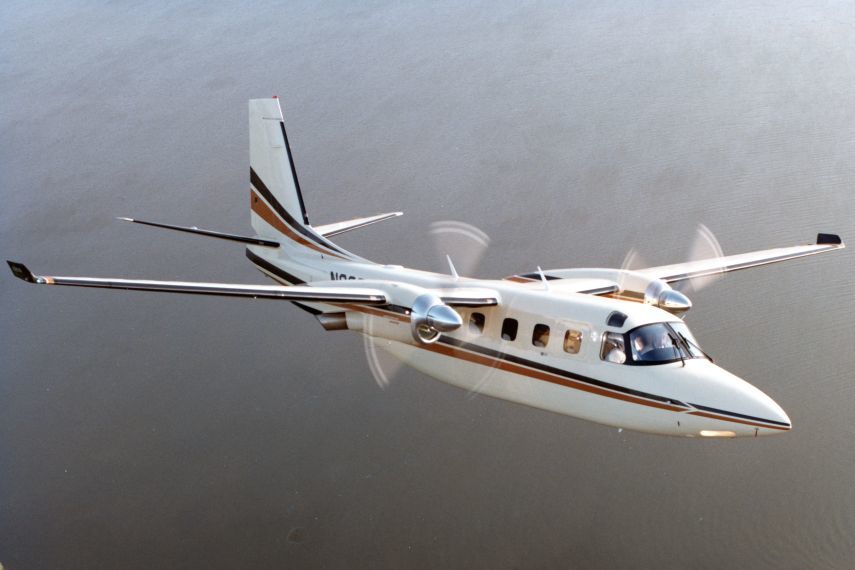
The Twin Commander Aircraft Commander 690 is a medium twin turboprop produced between 1972 and 1985. It has a range of 1300 nm, a cruise speed of 270 kt (500 km/h), 8 seats (pilot included). Out of production; on the used market the median is around US$ 620.000. In Brazil there are 25 units registered in the RAB-ANAC. There are 8 aircraft from this family for sale today, across 9 listings on the portals Jet Tracker tracks (global market, not Brazil only).

Source: RAB-ANAC (data as of 9/22/2026) and Jet Tracker catalog (spec sheet reviewed on 9/6/2026).

Acquisition price · pre-owned market
limited data9 active listings (global)Jet Tracker curation · 7 sources · 04/06/2026
US$ 620.0 milR$ 3.2 mi
market medianaging ≈ −5.8%/yr−72% vs Turbohélice Twin Medium median
Entry
US$ 420.0 mil
model year 1972
Best value
US$ 600.0 mil
model year 1976
Top of range
US$ 720.0 mil
model year 1981
Basis
Valuation
Bluebook + market
Minimum
US$ 340.0 mil
R$ 1.7 mi
Median
US$ 620.0 mil
R$ 3.2 mi
Maximum
US$ 1.5 mi
R$ 7.7 mi
Depreciation curve by year of manufacture
CAGR +6.2%/yr·1972→1981
Market median by vintage (USD). Light-blue band = min/max range observed across real listings. Points without reliable public listings (n ≤ 1) use Bluebook/curve interpolation and are flagged as lower confidence.
5 of 5 points with reduced confidence (n ≤ 1 listing observed). The estimate for these years comes from Aircraft Bluebook / market-curve interpolation, not from direct listings.
Landed in Brazil

Index ≈ ×1.17 to ×1.37 on the aircraft value, already with ferry, ANAC nationalization and ICMS.

Air taxi
US$ 403.6 mil – 1.8 mi
R$ 2.1 mi – 9.0 mi · ICMS Agreement 75/91 · ~4 to 5%
Private use
US$ 451.2 mil – 2.0 mi
R$ 2.3 mi – 10.5 mi · ICMS ~18 to 25%

Market estimate: value + ferry + ANAC nationalization + ICMS, no legal review. Federal taxes (II/IPI/PIS/COFINS) ~0% for aircraft (NCM 88.02); the weight is the state ICMS, higher for private use.

Cost per flight hour
Operate · owned
US$ 1.2 mil/h
R$ 6.3 mil/h · Variable/h
Fixed/yr
US$ 284.7 mil
Total/h @ 400 hrs/yr
US$ 1.9 mil/h
Charter · 🌎 World
US$ 2.0 mil – 3.0 mil/h
R$ 10.2 mil – 15.4 mil/h
Charter · 🇧🇷 Brazil
US$ 0 – 0/h
R$ 0 – 0/h

Operate = direct cost/hour (fuel + maintenance + engine); excludes fixed costs (hangar, crew, insurance). No published per-hour rate for this specific type; direct charter pages (Jettly) returned 403. World range inferred from Jettly turboprop floor (~US$2,000/hr) and comparable cabin-class turboprop charter (~US$2,950/hr, Paramount Business Jets). BR per-hour not found publicly (br set to [0,0]).

How we read this price · 7 sources · researched 04/06/2026

Pre-owned 690-series (690/690A/690B) turboprop twin. Verified asking: 1974 690A US$599,000 (AircraftExchange, opened directly). Variant medians via Aircraft Cost Calculator: 690A avg ~US$600k, 690B avg ~US$670k. US asking range ~US$340k (early frames needing upgrades) to ~US$1.5M (Dash-10 conversions + Garmin glass). BR: 1978 690B Dash-10 listed US$1,600,000 fully refurbished (AviationStore101, opened directly), treated as upper outlier, not in aggregate max. doc/hr anchored to GlobalAir spec sheet cost/hr US$1,441 and ACC 690B variable ~US$1,424/hr at $4.25/gal fuel. Sources accessed 2026-06-04.

  • AircraftExchange - 1974 Twin Commander 690A, opened directly; asking US$599,000, 10,284 TTAF, Garmin GNS530W/430W, ADS-B
  • GlobalAir - Twin Commander 690B specifications, opened directly; cost per hour US$1,441.08, cruise 279 kt, range 820-1,100 nm
  • GlobalAir - Twin Commander 690 / 690B listings, opened directly; current inventory (1977 690B XA-GDS) prices 'Please Call'
  • Aircraft Cost Calculator - Twin Commander 690A, 403 on direct fetch; via search: avg pre-owned ~US$600k, variable ~US$641,025/yr, US$3,926/hr at 200h/$7 fuel
  • Aircraft Cost Calculator - Twin Commander 690B, 403 on direct fetch; via search: avg pre-owned ~US$670k, variable US$641,025/yr (~US$1,424/hr) at $4.25/gal
  • AviationStore101 (BR) - 1978 Turbo Commander 690B Dash-10, opened directly; US$1,600,000, 8,847 H, under full refurbishment (upper outlier)
  • Controller.com - Commander 690/690A/690B listings, 403 on direct fetch; via search: US asking range ~US$340k-1.5M

PTAX · R$ 5,12 / US$ · 22/09/2026

Market estimates for guidance only, not a firm quote. Confirm the value with a broker/appraiser before any transaction.

  • Identity
  • Specs
  • Cabin
  • History
  • Market
  • Brazil
  • Global
  • Lineage
  • Curiosities
  • Accidents
  • Identity
  • Specs
  • Cabin
  • History
  • Market
  • Brazil
  • Global
  • Lineage
  • Curiosities
  • Accidents

Temporal identity

First flight
—
FAA cert.
19 de jul de 1971
ANAC cert.
—
Deliveries start
—
Units produced
79

O Commander 690, da Twin Commander Aircraft, é um turboélice bimotor pressurizado produzido entre 1972 e 1985. Com 1.300 nm de alcance, velocidade de cruzeiro de 270 kt e teto operacional de 33.000 ft, acomoda 7 ocupantes em configuração típica e até 8 no máximo, com peso máximo de decolagem de 4.707 kg. No registro da ANAC o tipo aparece pelo código ICAO AC90. É uma opção avaliada por operadores brasileiros que precisam de cabine pressurizada e autonomia regional dentro do mercado de usados, já que a produção foi encerrada em 1985.

Detailed specs

Performance

Engines
2x Garrett (Honeywell) TPE331-5
Mtow Lb
10.325
Range Nm
1.230
Max Speed Kt
297
Configuration
high-wing
Velocidade de cruzeiro
285 kt
Fuel Capacity Lb
2.680
Combustível
399,4 gal
Razão de subida
2.820 ft/min
Teto de serviço
31.000 ft
Distância de pouso
2.110 ft
Pista balanceada (BFL)
2.480 ft
Shaft Horsepower Per Engine
700

Cabin and comfort

Lavatory
Aft com cortina (belted potty)
Configuration
6-7 passageiros em club + side-facing, cabine pressurizada
Largura da cabine
56 in
Configuração típica
Club 4 + 2 Aft Facing
Stand Up Cabin
Não
Altura da cabine
53 in
Comprimento da cabine
13 ft
Volume da cabine
6,34 m³
Pressurização diferencial
5,2 psi
Baggage Capacity Cuft
60
Cabin Altitude At 25kft Ft
8.000

Avionics and engines

Fms
Não equipado de série (GPS retrofit moderno)
Tcas
Opcional retrofit
Cockpit
Bendix/King ou Collins analog (configuração original 1973-1982)
Ads B Out
Não
Autopilot
Bendix/King KFC 200/300 ou Collins APS-65
Type Rating
Não requer type rating (sob 12.500 lb), mas TPE331 specific training exigido
Autothrottle
Não
Weather Radar
RDR-160/2000 opcional
Synthetic Vision
Não
Single Pilot Certified
Não

Operating costs

Fonte de dados
GlobalAir Twin Commander 690B specifications ($1,441/hr operating cost; 72 gph fuel consumption; 2x Honeywell TPE331-5) · Aircraft Cost Calculator - Twin Commander 690A / 690B ownership & operating cost pages · Honeywell TPE331 (Wikipedia / Hancock Enterprises / AOPA Turbine Pilot): 5,400 hr TBO, ~$186k-$250k per-engine overhaul · AvBuyer 'What is Turboprop Engine Maintenance' + Jet Advisors Turbo Commander 690B (maintenance/insurance benchmarks: $25k-$40k maint/yr, $10k-$20k insurance/yr)
Fuel Burn Gph
105
Price New Usd
—
Annual Fixed Usd
290.000
Última atualização
2026
Hourly Operating Usd
1.400
Engine Overhaul Cost Usd
380.000
Current Market Price Usd Low
700.000
Engine Overhaul Period Hours
5.400
Current Market Price Usd High
1.500.000

External dimensions

Comprimento total
13,52 m
Envergadura
14,22 m
Altura
4,55 m

Weights & fuel

Peso operacional vazio (OEW)
2.680 kg
Peso máximo de decolagem (MTOW)
4.707 kg
Capacidade de combustível
1.512 L
Capacidade de combustível
2.706 lb

Minimum runway

RBAC 135.399 · no factoring (≤ 5,670 kg, assumes normal category)sea level / ISA reference

How much runway the Commander 690 needs to dispatch: the manual figure and what the charter (RBAC 135) rule requires.

Landing, manual (AFM)
643m
unfactored landing · source: aopa.org
Charter (RBAC 135)
756m
no factoring · RBAC 135.399, assuming normal category; small transport-category aircraft are factored (135.397)
Takeoff or BFL, manual
756m
unfactored takeoff, manufacturer

No mandatory factoring: fits 450 of 465 Brazilian public runways.

Where it fits under charter rules, calm air

Click the runway figure to open the official aerodrome chart and check it. Declared distance from AISWEB (2026-09-05); where none exists, physical length is used.

AirfieldRunway135 dryRBAC 91
SNRPRio Paranaíba Airport550 mLDAno fit-206no fit
SNMRMaraú Airport630 mLDAno fit-126no fit
SWEKCanarana Airport685 mLDAno fit-71no fit
SSKKCapão da Canoa Airport700 mLDAno fit-56no fit
SDLYArmando Natali Airport750 mLDAno fit-6no fit
SDPDPindamonhangaba Airport750 mLDAno fit-6no fit
SSUVJosé Cleto Airport755 mLDAno fit-1no fit
SSNGMontenegro Airport795 mLDAfits+39fits
SWFNFlores Airport799 mLDAfits+43fits
SDTBAtibaia Airport800 mLDAfits+44fits
SSAKCarlos Ruhl Airport800 mLDAfits+44fits
SSSTSantiago Airport830 mLDAfits+74fits
SDTKParaty Airport850 mLDAfits+94fits
SNRXRiachão Airport860 mLDAfits+104fits
SBJRJacarepaguá - Roberto Marinho Airport900 mLDAfits+144fits
SDRKRio Claro Airport900 mLDAfits+144fits
SNJBJacobina Airport900 mLDAfits+144fits
SSIRIbirubá Airport900 mLDAfits+144fits
SNKFDas Bandeirinhas Airport902 mLDAfits+146fits
SSOSOsório Airport950 mLDAfits+194fits

Shortest public runways where it dispatches under charter rules (dry)

  • SDVEVera Cruz Airport770 m
  • SSNGMontenegro Airport795 m
  • SWFNFlores Airport799 m
  • SDTBAtibaia Airport800 m
  • SNSISanta Maria do Suaçuí Airport800 m
  • SSAKCarlos Ruhl Airport800 m
Minimum runway

Where the Commander 690 dispatches under charter rules

Verdict per regime (private, charter dry and wet) across 465 Brazilian public runways, with the margin in meters.

See with Pro

Pro feature. Available on your Jet Tracker account.

Manufacturer-published distances at sea level, ISA and reference weight. Not corrected for altitude, temperature, wind or runway condition, takeoff included. Uses the declared LDA as a proxy for effective runway length (RBAC 135.361) and the most favourable threshold in calm air (135.385(b)(1)): on the day, wind may force the shorter threshold. Destination only: does not assess the alternate aerodrome (135.387). Not a substitute for the AFM or the operator's performance analysis. Rule: RBAC 135.385 and 135.398; private flying (RBAC 91) is not factored. Runways: declared distance (LDA) from AISWEB/DECEA (2026-09-05), checkable on each aerodrome chart; where DECEA publishes no declared distance, physical length from OurAirports is used.

Cabin

Standard configuration
1 zona7 typical seats (pilot included) · 8 maxClub 42 de frente p/ a cauda

Typical factory configuration (curated data). The drawing below is schematic and at approximate scale; the actual layout varies by interior and year.

Cabin to scale: cross-section and profile
✗ no stand-up height
1,32 m1,42 m
front cross-section · person = 1.75 m
3,91 m long
Length
3,91 m
Width
1,42 m
Height
1,32 m
Volume
6,34 m³
Baggage
—

History

  1. 1971FAA certification
  2. 1973 - Linhagem desde 1948, design Ted Smith do Aero Commander 500

    A linhagem Aero/Twin Commander começou em 1948 com o Aero Commander 520, projeto do engenheiro Ted Smith (que depois criou o Aerostar 600). A versão pistão atravessou o Aero Commander 500/560/680 nas décadas de 1950-60, e a turbinização chegou em 1964 com o Turbo Commander 680T. O 690 foi lançado em 1973 sob a Rockwell International com motorização Garrett TPE331-5 atualizada e fuselagem refinada, e foi o turboélice de maior sucesso comercial da família. Foram produzidas aproximadamente 950 unidades das variantes 690 (690, 690A, 690B) entre 1973 e 1982.

    Wikipedia / Twin Commander Aircraft
  3. 1985End of production

Market position

Market position analysis pending.

Brazil Fleet

Twin Commander 690.

Twin Commander 690 (1972-1985), twin turboprop histórico. Frota BR estimada 2-5 aeronaves operacionais. Aeronaves 40-50 anos. Mercado pre-owned: US$ 300-700k.

25 registrations in the RAB (all statuses)

Full analysis: listing, mark reservations, charts and change log in the ANAC Monitor.

Open Analytics→

Global fleet

Global distribution pending.

Lineage

Model with no documented lineage in the manufacturer's line.

Curiosities and highlights

Benefits

Configuração alta-asa entrega visibilidade superior em cabine

Diferente da concorrência (King Air, Conquest II) com asa baixa, o Twin Commander 690 mantém o design alto-asa de Ted Smith com gôndolas de motor sobre a fuselagem. Isso entrega visibilidade panorâmica para passageiros em janelas laterais (sem asa cortando a vista), facilita acesso ao bagageiro frontal e cria silhueta executiva reconhecível à distância. Operadores nostálgicos e proprietários colecionadores valorizam essa identidade visual única.

285 kt de cruzeiro coloca o 690 entre turboprops mais rápidos da era 1970-80

Os Garrett TPE331-5 de 700 SHP entregam 285 kt em cruzeiro alto, equiparáveis ao King Air B100 e superiores ao Cessna Conquest I (245 kt). Com alcance de 1.230 nm é capaz de missões executivas continentais nos EUA e regionais na América Latina. O rate of climb inicial de 2.820 fpm é particularmente alto para a categoria.

Operadores notáveis incluíram presidentes, executivos e celebridades

O Aero/Twin Commander construiu reputação entre executivos sêniores e líderes mundiais. O presidente americano Dwight D. Eisenhower utilizou o Aero Commander 560A como aeronave executiva durante seu mandato (1953-61). Executivos notáveis como Bob Hoover (renomado piloto de demonstração) e várias corporações Fortune 500 mantinham frotas dedicadas. Essa herança histórica mantém apelo do modelo entre proprietários enthusiast.

Limitations

Produção encerrada em 1982 e suporte concentrado em hubs especializados

A produção do 690 foi encerrada em 1982 quando a Rockwell saiu do segmento. Hoje a Twin Commander Aircraft Corporation (Arlington, WA) opera apenas como provedor de suporte e peças, sem produção nova. O suporte do Garrett TPE331-5 depende de centros Honeywell autorizados, e as unidades remanescentes têm 40+ anos exigindo retrofit completo de avionics (USD 150-200k) para operação atual com ADS-B Out, GPS WAAS e PBN.

Curiosities

Variantes Jetprop 840/900/980 introduziram melhorias incrementais de potência

A linhagem 690 evoluiu para variantes Jetprop 840 (1979, TPE331-5-251K mais potente), Jetprop 900 (1983, MTOW maior) e Jetprop 980/1000 (1981-86, TPE331-10 com 1.000 SHP). Embora a produção do 690-base tenha terminado em 1982, as variantes Jetprop continuaram sendo entregues sob a marca Gulfstream Commander (após a Rockwell vender a divisão em 1981) até 1986. Algumas dessas variantes top-end alcançam 304 kt de cruzeiro, competindo diretamente com King Air 350.

Catalogued accidents

Sources: NTSB, CENIPA, Aviation Safety Network

6/6/2014· BR· JUNDIAÍ
PR-MRN
·Minor

PERDA DE CONTROLE NO SOLO

9/26/2013· BR· TERESINA
PR-ORB
!Serious

ESTOURO DE PNEU

Frequently asked questions

How much does the Twin Commander Aircraft Commander 690 cost?+

The Twin Commander Aircraft Commander 690 is out of production, so there is no factory price. On the used market the median is around US$ 620.000, varying with year and flight hours; see real listings on this model's Market tab.

What is the range of the Twin Commander Aircraft Commander 690?+

The maximum range is 1300 nm (1.300 NM · 2.408 km).

How fast is the Twin Commander Aircraft Commander 690?+

Cruise speed is 270 kt, equivalent to 500 km/h.

How many passengers does the Twin Commander Aircraft Commander 690 seat?+

The Twin Commander Aircraft Commander 690 has 8 seats in total, counting the pilot seat: up to 6 passengers.

How many Twin Commander Aircraft Commander 690 are there in Brazil?+

There are 25 units registered in the RAB-ANAC (data as of 9/22/2026).

Who operates the Twin Commander Aircraft Commander 690 in Brazil?+

23 distinct operators operate 24 units of the Twin Commander Aircraft Commander 690 in the RAB-ANAC: 2 in air taxi (RBAC 135) and 22 in private operation (RBAC 91), concentrated in SP, PR and ES (data as of 9/22/2026). Another 1 unit is under registration reservation (tail number reserved, not yet operating). Name, fleet and base of each operator are on this model's Analytics tab and in the operators directory.

How much does it cost to operate a Twin Commander Aircraft Commander 690 per hour?+

Jet Tracker estimate: about US$ 1,947 per flight hour at 400 h/year, of which US$ 1,236 per hour is variable cost (fuel, engine program, maintenance reserves) plus US$ 284,660 per year of fixed cost (crew, hangar, insurance), under Jet Tracker's default assumptions (Southeast Brazil, in-house crew, 400 h/year). Run your own scenario on this model's Costs tab.