Cabine quadrada (square oval)
Seção transversal quadrada oferece largura útil maior por altura que cabines circulares dos concorrentes Citation da época.
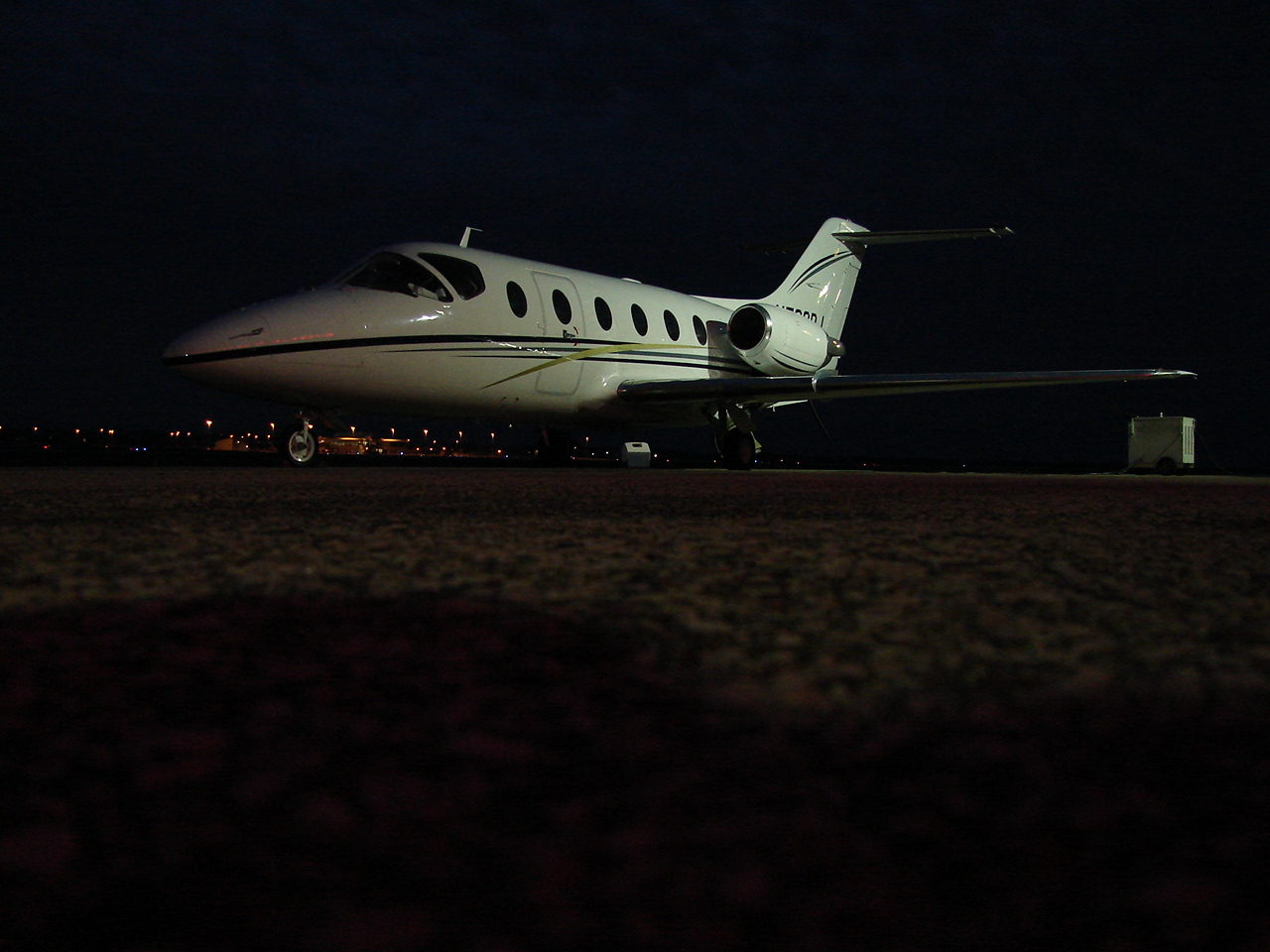
BE40The Mitsubishi Heavy Industries Diamond II MU-300 is a light jet produced between 1981 and 1986. It has a range of 1500 nm, a cruise speed of 458 kt (848 km/h), Mach 0.80, up to 9 passengers. Out of production; on the used market the median is around US$ 375.000. There is 1 aircraft from this family for sale today, across 1 listing on the portals Jet Tracker tracks (global market, not Brazil only).
Source: RAB-ANAC (data as of 9/22/2026) and Jet Tracker catalog (spec sheet reviewed on 9/3/2026).
Index ≈ ×1.29 to ×1.56 on the aircraft value, already with ferry, ANAC nationalization and ICMS.
Market estimate: value + ferry + ANAC nationalization + ICMS, no legal review. Federal taxes (II/IPI/PIS/COFINS) ~0% for aircraft (NCM 88.02); the weight is the state ICMS, higher for private use.
Operate = direct cost/hour (fuel + maintenance + engine); excludes fixed costs (hangar, crew, insurance). Mundo: compareprivateplanes/flycraft ~US$2.600/h e Paramount Business Jets ~US$2.850/h para o Diamond 1A (variante irma do Diamond II, mesma celula/JT15D). BR estimado acima da faixa mundial pelo premio de operacao local (cambio, custo de manutencao importada); faixa inferida, sem cotacao publica direta de charter do MU-300 no BR.
Light jet raro (1981-1986, descontinuado; design vendido a Beechcraft em 1985 -> Beechjet 400). Poucos exemplares no mercado e grande divergencia entre asking otimista e valor de avaliacao. Valor de mercado real ancorado em fontes de avaliacao: planephd PAPI estimou ~US$342.951 para um 1984 (acessado mar/2026) e GenavServices listou asking medio de US$423.000 (fev/2014). Listings de asking em Controller.com (a partir de ~US$1,295M) sao otimistas/refurb e a categoria Mitsubishi do site mistura MU-2 turbohelice e Beechjet 400, por isso usados so como teto. BR: aeronavesavenda.com tinha cota de 25% de um 1983 (PP-JCP, MT) por R$1.500.000, implicando ~R$6M para 100% (~US$1,0M a cambio ~5,8); usado como teto BR. doc/hora (custo variavel direto) ~US$2,2-2,5k/h: compareprivateplanes/flycraft US$2.247/h variavel; aircraftcostcalculator ~US$3.515/h total a US$6/gal (450h). Controller/AircraftBluebook/aircraft.com retornaram 403 ao WebFetch; numeros via WebSearch e fontes acessadas. Fontes acessadas mar-jun/2026.
PTAX · R$ 5,12 / US$ · 22/09/2026
Market estimates for guidance only, not a firm quote. Confirm the value with a broker/appraiser before any transaction.
O Mitsubishi MU-300 Diamond II é um jato leve produzido pela Mitsubishi Heavy Industries entre 1981 e 1986, projeto que depois deu origem ao Beechjet 400 e à família Hawker 400. Tem alcance de 1500 nm, velocidade de cruzeiro de 458 kt e peso máximo de decolagem de 6577 kg, com 7 assentos na configuração típica e até 9 no total. Nesta página estão a ficha técnica, a estimativa de custo operacional por hora de voo e a frota registrada no Brasil, com matrículas e operadores.
How much runway the Diamond II MU-300 needs to dispatch: the manual figure and what the charter (RBAC 135) rule requires.
Dispatches under charter rules at 239 of 465 Brazilian public runways when dry, and at 130 when wet.
Verdict per regime (private, charter dry and wet) across 465 Brazilian public runways, with the margin in meters.
Pro feature. Available on your Jet Tracker account.
Manufacturer-published distances at sea level, ISA and reference weight. Not corrected for altitude, temperature, wind or runway condition, takeoff included. Uses the declared LDA as a proxy for effective runway length (RBAC 135.361) and the most favourable threshold in calm air (135.385(b)(1)): on the day, wind may force the shorter threshold. Destination only: does not assess the alternate aerodrome (135.387). Not a substitute for the AFM or the operator's performance analysis. Rule: RBAC 135.385 and 135.398; private flying (RBAC 91) is not factored. Runways: declared distance (LDA) from AISWEB/DECEA (2026-09-05), checkable on each aerodrome chart; where DECEA publishes no declared distance, physical length from OurAirports is used.
Typical factory configuration (curated data). The drawing below is schematic and at approximate scale; the actual layout varies by interior and year.
Desenvolvido pela Mitsubishi Heavy Industries no Japão, primeiro voo em agosto de 1978 e certificação FAA em novembro de 1981. Produção em San Angelo, Texas.
Mitsubishi vendeu o programa para a Beech Aircraft em dezembro de 1985, que renomeou o modelo para Beechjet 400, origem direta da família 400/400A/400XP.
Estimativa preliminar, predecessor Beechjet.
Mitsubishi Diamond II MU-300 (1981-1986, ~95 unidades antes da Beechcraft adquirir a linha), frota BR mínima, estimativa 1-2 aeronaves operacionais. Predecessor direto do Beechjet 400. Mercado pre-owned: US$ 300-700k.
Seção transversal quadrada oferece largura útil maior por altura que cabines circulares dos concorrentes Citation da época.
Frota original japonesa pequena e descontinuada há décadas, operadores dependem cada vez mais de mercado de usadas e PMA para manutenção.
Equipado com Pratt & Whitney Canada JT15D-4, mesma família de motor usada no Citation I/II, facilitando crossover de mecânicos entre frotas.
The Mitsubishi Heavy Industries Diamond II MU-300 is out of production, so there is no factory price. On the used market the median is around US$ 375.000, varying with year and flight hours; see real listings on this model's Market tab.
The maximum range is 1500 nm (1.500 NM · 2.778 km).
Cruise speed is 458 kt, equivalent to 848 km/h, or Mach 0.80.
The Mitsubishi Heavy Industries Diamond II MU-300 seats up to 9 passengers, crew not included.
Jet Tracker estimate: about US$ 3,364 per flight hour at 400 h/year, of which US$ 2,628 per hour is variable cost (fuel, engine program, maintenance reserves) plus US$ 294,500 per year of fixed cost (crew, hangar, insurance), under Jet Tracker's default assumptions (Southeast Brazil, in-house crew, 400 h/year). Run your own scenario on this model's Costs tab.