jet·tracker
  • Jet CRMNEW
  • Pricing
  • Home
  • Explore
  • Radar
  • Me
jet·tracker

The intelligence terminal for Brazilian executive aviation. An independent platform, fleet, market and official data in one place.

Create free account→

Jet Hub

  • Showroom
  • Aircraft Catalog
  • Range Map
  • Comparison
  • Value your aircraft

Jet Radar

  • Live fleet
  • Flight intelligence
  • Flight Radar

Analytics

  • Blog
  • Reports
  • Overview
  • Owners
  • Operators
  • Tradings & Importers
  • MRO
  • Airports
  • Parts & Materials
  • Air Taxi
  • Fractional
  • Changelog

Account

  • Pricing
  • API and MCP (developers)
  • Create free account
  • Sign in

Data (RAB/ANAC, FAA, Brazilian Federal Revenue, marketplaces) and the editorial curation of specs may contain errors, lag or approximations. ADS-B-derived positions and airports have partial coverage, and estimates, inferences and AI responses are approximations, they are not advice or an appraisal. Verify with primary sources before any decision. See the Terms.

© 2026 Jet Tracker·Made in Brazil 🇧🇷
TermsPrivacyLGPDSupportData sources
/
/
Skip to content
  1. Home
  2. /
  3. Models
  4. /
  5. Embraer
  6. /
  7. Embraer EMB-820C Carajá
Embraer
AnalyticsFor sale →Costs →Compare →

Embraer EMB-820C Carajá

PAT4
Light Twin TurbopropDiscontinued1984–2000
Range
745 NM · 1.380 km
MTOW
3.629 kg
Cruise
216 kt · 400 km/h
Seats
10
10 seats (pilot included)
Used price
US$ 350.000
Explore this model
Fleet and analytics

How many fly in Brazil, owners and operators, historical series

48 in Brazil
For sale now

Active listings, asking prices and used median

1 listing · median US$ 350.000
Cost per hourOperating cost

Hourly cost, fixed and variable, run your scenario

US$ 1.442/h at 400h/yr
CompareCompare competitors

Specs, costs and market side by side

Open
  • Costs

The Embraer EMB-820C Carajá is a light twin turboprop produced between 1984 and 2000. It has a range of 745 nm, a cruise speed of 216 kt (400 km/h), 10 seats (pilot included). Out of production; on the used market the median is around US$ 350.000. In Brazil there are 48 units registered in the RAB-ANAC. There is 1 aircraft from this family for sale today, across 1 listing on the portals Jet Tracker tracks (global market, not Brazil only).

Source: RAB-ANAC (data as of 9/22/2026) and Jet Tracker catalog (spec sheet reviewed on 9/7/2026).

Acquisition price · pre-owned market
limited data1 active listings (global)Jet Tracker curation · 7 sources · 04/06/2026
US$ 350.0 milR$ 1.8 mi
market medianaging ≈ −3.1%/yr−53% vs Turbohélice Twin Light median
Entry
US$ 320.0 mil
model year 1982
Best value
US$ 350.0 mil
model year 1986
Top of range
US$ 420.0 mil
model year 1988
Basis
Listings
real listings
Minimum
US$ 300.0 mil
R$ 1.5 mi
Median
US$ 350.0 mil
R$ 1.8 mi
Maximum
US$ 900.0 mil
R$ 4.6 mi
Depreciation curve by year of manufacture
CAGR +3.2%/yr·1982→1989
Market median by vintage (USD). Light-blue band = min/max range observed across real listings. Points without reliable public listings (n ≤ 1) use Bluebook/curve interpolation and are flagged as lower confidence.
4 of 5 points with reduced confidence (n ≤ 1 listing observed). The estimate for these years comes from Aircraft Bluebook / market-curve interpolation, not from direct listings.
Landed in Brazil

Index ≈ ×1.21 to ×1.44 on the aircraft value, already with ferry, ANAC nationalization and ICMS.

Air taxi
US$ 362.0 mil – 1.1 mi
R$ 1.9 mi – 5.7 mi · ICMS Agreement 75/91 · ~4 to 5%
Private use
US$ 404.0 mil – 1.3 mi
R$ 2.1 mi – 6.7 mi · ICMS ~18 to 25%

Market estimate: value + ferry + ANAC nationalization + ICMS, no legal review. Federal taxes (II/IPI/PIS/COFINS) ~0% for aircraft (NCM 88.02); the weight is the state ICMS, higher for private use.

Cost per flight hour
Operate · owned
US$ 895/h
R$ 4.6 mil/h · Variable/h
Fixed/yr
US$ 218.8 mil
Total/h @ 400 hrs/yr
US$ 1.4 mil/h
Charter · 🌎 World
US$ 1.0 mil – 1.2 mil/h
R$ 5.1 mil – 6.1 mil/h
Charter · 🇧🇷 Brazil
US$ 900 – 1.3 mil/h
R$ 4.6 mil – 6.7 mil/h

Operate = direct cost/hour (fuel + maintenance + engine); excludes fixed costs (hangar, crew, insurance). PA-31 Navajo-class charter ~US$1000-1200/hr (Mercury Jets, Monarch). BR turboprop Carajá band estimated similar to a light twin-turboprop charter; no public Flapper Carajá-specific quote found, so BR range is an estimate anchored to world rate plus typical BR premium.

How we read this price · 7 sources · researched 04/06/2026

Discontinued BR-built Piper PA-31 derivative (Embraer/Neiva). Market labels the PT6A-27/-34 twin-turboprop conversion as both EMB-820C and EMB-821 'Carajá' interchangeably; nearly all listings are in Brazil and many quote 'consulte'/reference prices, so spread is wide and data thin (limited_data). Real points (FX 5.06 BRL/USD, BCB 2026-06-03): 1989 EMB-820C 3364h R$1.4M~US$277k (aeromarketplace, sold/withdrawn); 1989 EMB-821 4115h US$900k asking (compreasaalta); 1988 EMB-820C 2500h US$1.5M asking-outlier (aeromercado-cited); 1989 R$1.8M~US$356k; 1986 EMB-821 7970h R$3.5-10M 'reference only' (aeronavesavenda); piston PA-31-350 airframe basis retail US$209k (planephd PAPI 2026-03-01, 1973-84 MY). Twin-turboprop (two PT6A-27/-34, 550shp ea, confirmed twin, not single; category turboprop_twin_light, floor US$0.3M). Median anchored to sale-likely BR light twin-turboprop range (~US$350k); min set to category floor (US$0.3M, near the real US$277k withdrawn 1989 listing); max capped at a real direct asking (US$900k), excluding the US$1.5M/R$10M aspirational outliers. DOC ~US$600/hr (PT6A turboprop class, ~50gph Jet-A; piston PA-31-350 variable was US$484/hr per planephd).

  • AeroMarketplace - Carajá EMB-820C 1989, opened: 1989, 3364h, turbo-hélice, R$1,400,000 (listing withdrawn)
  • Compre a Sa Alta - EMB-821 Carajá 5367, opened: 1989, 4115h, PT6A-34 550shp, US$900,000 asking
  • AeronavesaVenda - EMB-821 Carajá 1986, opened: 1986, 7970h, twin turboprop, R$3.5-10M reference-only band
  • AeroMercado - Carajá EMB-820C 1985, opened: 1985, 2832h airframe, PT6A-27 turboprops, price 'CONSULTE'
  • planephd - PIPER PA-31-350 Chieftain (airframe basis), opened: PAPI price estimate US$208,903 (2026-03-01, 1973-84 MY); variable cost US$483.87/hr, fuel US$235.44/hr
  • BCB / TradingEconomics USD-BRL, opened: USD/BRL 5.06 on 2026-06-04 (BCB 5.0415 on 2026-06-03) used for all BRL->USD conversions
  • Wikipedia - Piper PA-31 Navajo / Embraer EMB-820, type/spec context: 50 EMB-820C converted to PT6A-27 turboprop as Neiva NE-821 Carajá

PTAX · R$ 5,12 / US$ · 22/09/2026

Market estimates for guidance only, not a firm quote. Confirm the value with a broker/appraiser before any transaction.

  • Identity
  • Specs
  • Cabin
  • History
  • Market
  • Brazil
  • Global
  • Lineage
  • Curiosities
  • Accidents
  • Identity
  • Specs
  • Cabin
  • History
  • Market
  • Brazil
  • Global
  • Lineage
  • Curiosities
  • Accidents

Temporal identity

First flight
—
FAA cert.
—
ANAC cert.
—
Deliveries start
—
Units produced
50

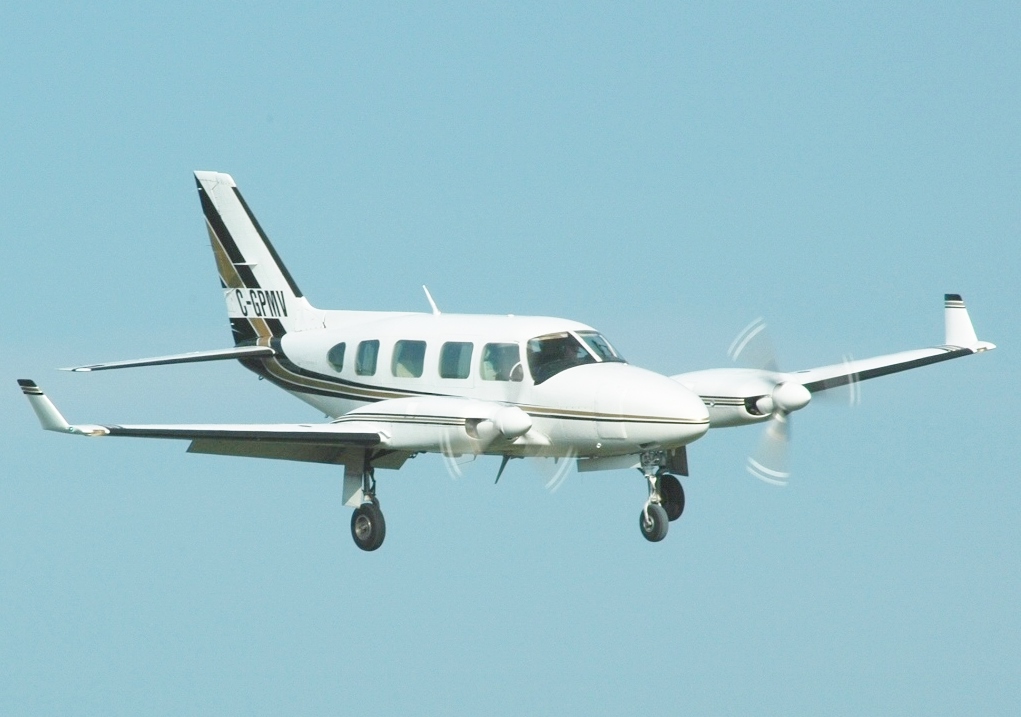
O EMB-820C Carajá é a conversão turboélice do EMB-820 Navajo, o Piper PA-31-350 Chieftain fabricado sob licença pela Embraer e pela Neiva. A partir de 1984 a Neiva trocou os motores a pistão por dois Pratt & Whitney Canada PT6A-27 de 550 shp, e o avião foi produzido até 2000. Peso máximo de decolagem de 3.629 kg, cruzeiro de 216 kt, alcance de cerca de 745 nm, teto de 24.000 ft e cabine para 1 piloto e 7 passageiros (fonte: Wikipedia, com base no Centro Histórico Embraer e na Flight International). Por ser um modelo antigo e fora de linha, disponibilidade de peças e histórico de manutenção pesam bastante na avaliação. Nesta página estão a ficha técnica, a estimativa de custo por hora de voo e a frota registrada no país.

Detailed specs

Performance

Engines
2x Pratt & Whitney Canada PT6A-27 (flat-rated 550 shp)
Mtow Lb
8.000
Range Nm
745
Max Speed Kt
240
Useful Load Lb
2.980
Velocidade de cruzeiro
216 kt
Fuel Capacity Lb
—
Combustível
—
Razão de subida
—
Teto de serviço
24.000 ft
Distância de pouso
1.650 ft
Pista balanceada (BFL)
2.100 ft
Shaft Horsepower Per Engine
550

Cabin and comfort

Lavatory
Não possui
Cargo Door
Sim
Configuration
Até 9 passageiros utility ou cargueiro convertível
Unpressurized
Sim
Largura da cabine
64 in
Stand Up Cabin
Não
Altura da cabine
54 in
Comprimento da cabine
12,7 ft
Volume da cabine
3,45 m³
Pressurização diferencial
0 psi
Baggage Capacity Cuft
111

Avionics and engines

Fms
Não equipado de série (GPS retrofit)
Tcas
Não
Cockpit
Bendix/King analog steam gauges (configuração original anos 1980)
Ads B Out
Não
Autopilot
Bendix/King KAP-150 opcional
Type Rating
Não requer (single-engine sob CHT)
Autothrottle
Não
Weather Radar
RDR-160 opcional
Synthetic Vision
Não
Single Pilot Certified
Sim

Operating costs

Fonte de dados
https://planephd.com/wizard/details/618/PIPER-PA-31T-620-Cheyenne-II-specifications-performance-operating-cost-valuation · https://aviacost.com/aircraft-operating-cost-calculator/piper-cheyenne-ii · https://www.globalair.com/aircraft-specifications/piper/cheyenne-ii-pa-31t-620-specifications/247 · https://propilotmag.com/maintenance-programs/ · https://www.avbuyer.com/articles/business-aviation-engines/pt6a-engine-what-s-it-worth-in-today-s-market-112271
Fuel Burn Gph
50
Price New Usd
—
Annual Fixed Usd
150.000
Última atualização
2026
Hourly Operating Usd
650
Engine Overhaul Cost Usd
280.000
Current Market Price Usd Low
600.000
Engine Overhaul Period Hours
3.600
Current Market Price Usd High
1.100.000

External dimensions

Comprimento total
10,55 m
Envergadura
12,39 m
Altura
3,96 m
Área da asa
21,3 m²
Enflechamento da asa
0°

Weights & fuel

Peso operacional vazio (OEW)
2.300 kg
Peso máximo de decolagem (MTOW)
3.629 kg
Carga máxima (payload)
1.351 kg

Minimum runway

RBAC 135.399 · no factoring (≤ 5,670 kg, assumes normal category)sea level / ISA reference

How much runway the EMB-820C Carajá needs to dispatch: the manual figure and what the charter (RBAC 135) rule requires.

Landing, manual (AFM)
503m
unfactored landing, manufacturer · source not on record
Charter (RBAC 135)
640m
no factoring · RBAC 135.399, assuming normal category; small transport-category aircraft are factored (135.397)
Takeoff or BFL, manual
640m
unfactored takeoff, manufacturer

No mandatory factoring: fits 459 of 465 Brazilian public runways.

Where it fits under charter rules, calm air

Click the runway figure to open the official aerodrome chart and check it. Declared distance from AISWEB (2026-09-05); where none exists, physical length is used.

AirfieldRunway135 dryRBAC 91
SNRPRio Paranaíba Airport550 mLDAno fit-90no fit
SNMRMaraú Airport630 mLDAno fit-10no fit
SWEKCanarana Airport685 mLDAfits+45fits
SSKKCapão da Canoa Airport700 mLDAfits+60fits
SDLYArmando Natali Airport750 mLDAfits+110fits
SDPDPindamonhangaba Airport750 mLDAfits+110fits
SSUVJosé Cleto Airport755 mLDAfits+115fits
SSNGMontenegro Airport795 mLDAfits+155fits
SWFNFlores Airport799 mLDAfits+159fits
SDTBAtibaia Airport800 mLDAfits+160fits
SSAKCarlos Ruhl Airport800 mLDAfits+160fits
SSSTSantiago Airport830 mLDAfits+190fits
SDTKParaty Airport850 mLDAfits+210fits
SNRXRiachão Airport860 mLDAfits+220fits
SBJRJacarepaguá - Roberto Marinho Airport900 mLDAfits+260fits
SDRKRio Claro Airport900 mLDAfits+260fits
SNJBJacobina Airport900 mLDAfits+260fits
SSIRIbirubá Airport900 mLDAfits+260fits
SNKFDas Bandeirinhas Airport902 mLDAfits+262fits
SSOSOsório Airport950 mLDAfits+310fits

Shortest public runways where it dispatches under charter rules (dry)

  • SWEKCanarana Airport685 m
  • SSKKCapão da Canoa Airport700 m
  • SSSSSão Francisco do Sul Airport700 m
  • SSEZEspumoso Airport713 m
  • SNMNMinas Novas Airport735 m
  • SDLYArmando Natali Airport750 m
Minimum runway

Where the EMB-820C Carajá dispatches under charter rules

Verdict per regime (private, charter dry and wet) across 465 Brazilian public runways, with the margin in meters.

See with Pro

Pro feature. Available on your Jet Tracker account.

Manufacturer-published distances at sea level, ISA and reference weight. Not corrected for altitude, temperature, wind or runway condition, takeoff included. Uses the declared LDA as a proxy for effective runway length (RBAC 135.361) and the most favourable threshold in calm air (135.385(b)(1)): on the day, wind may force the shorter threshold. Destination only: does not assess the alternate aerodrome (135.387). Not a substitute for the AFM or the operator's performance analysis. Rule: RBAC 135.385 and 135.398; private flying (RBAC 91) is not factored. Runways: declared distance (LDA) from AISWEB/DECEA (2026-09-05), checkable on each aerodrome chart; where DECEA publishes no declared distance, physical length from OurAirports is used.

Cabin

Standard configuration
1 zona8 typical seats (pilot included) · 10 max
Cabin to scale: cross-section and profile
✗ no stand-up height
1,30 m1,62 m
front cross-section · person = 1.75 m
5,32 m long
Length
5,32 m
Width
1,62 m
Height
1,3 m
Volume
3,45 m³
Baggage
—

History

Fruto da cooperação Embraer-Cessna iniciada em 1974

O Carajá nasceu dentro do acordo de cooperação industrial firmado entre Embraer e Cessna em 1974, que permitiu à Embraer produzir sob licença em São José dos Campos vários modelos Cessna e Piper para o mercado brasileiro e latino-americano. A linha incluía o EMB-810 Seneca, EMB-711 Corisco, EMB-712 Tupi, EMB-720 Minuano e o EMB-820 Navajo, o Carajá foi o último programa do acordo, encerrado em 1988 quando a Embraer saiu definitivamente da aviação geral.

1981Wikipedia / Embraer Historical Archive

End of production - 2000

2000

Apenas cerca de 16 unidades produzidas em sete anos

O programa Carajá teve produção marginal, registros indicam aproximadamente 16 unidades entregues entre 1981 e 1988, com clientes concentrados em Forças Armadas brasileiras, operadores de Amazônia e missões públicas. O baixo volume reflete tanto a competição direta com a importação do próprio Cessna 208 (que era preferida por questões de suporte) quanto o desinteresse comercial da Embraer em escalar o segmento utility após priorizar o EMB-120 Brasília.

Market position

Market position analysis pending.

Brazil Fleet

Embraer Carajá, bimotor turboélice (conversão PT6 do Navajo).

Embraer EMB-820C Carajá (Embraer/Neiva, 1984-2000, BR-made) é variante brasileira do Piper Navajo. Frota BR estimada 5-15 aeronaves operacionais, perfil táxi aéreo regional, transporte executivo e utilitário. Mercado pre-owned: US$ 100-300k.

48 registrations in the RAB (all statuses)

Full analysis: listing, mark reservations, charts and change log in the ANAC Monitor.

Open Analytics→

Global fleet

Global distribution pending.

Lineage

Model with no documented lineage in the manufacturer's line.

Curiosities and highlights

Benefits

PT6A-114A com TBO de 3.600 horas mantém custo operacional baixo

Como o Carajá compartilha o mesmo PT6A-114A do Cessna 208, mantém a confiabilidade lendária da série PT6A com TBO de 3.600 horas, fuel burn de 50 GPH e custo operacional direto na faixa de USD 650/hora, atrativo para operadores brasileiros em missões remotas no Norte e Centro-Oeste com pistas curtas e sem suporte estruturado.

Limitations

Suporte de peças desafiador devido ao baixo volume e descontinuação

Com apenas 16 unidades produzidas, peças específicas do Carajá (decoração interna, manuais em português, etiquetas Embraer) são escassas. A maioria dos componentes é compartilhada com o Cessna 208 e pode ser obtida via Textron Aviation, mas itens de fuselagem brasileira exigem fabricação sob demanda ou canibalização. Avionics legacy (Bendix/King analógico) também precisam upgrade para ADS-B Out (mandatório no Brasil desde 2024).

Avionics analógicos exigem retrofit completo para padrão atual

A configuração original anos 1980 do Carajá traz painel analógico Bendix/King sem GPS WAAS, sem ADS-B Out e sem synthetic vision. Para operação atual em IFR no Brasil, é necessário retrofit completo do painel (Garmin GTN 750/650 + GTX 345 + G500 TXi opcional) com investimento típico de USD 80.000-150.000, frequentemente inviabilizando economicamente unidades em estado regular.

Curiosities

Collector item raro, uma das últimas heranças da era Embraer-Cessna

Por ter sido produzido em volume mínimo (~16 unidades) e representar o fechamento histórico da cooperação Embraer-Cessna que durou 14 anos, o Carajá tornou-se collector item raro entre entusiastas da aviação brasileira. Algumas unidades sobreviventes operam em museus ou frotas históricas, e ocasionalmente aparecem no mercado usado por USD 600k-1.1M, preço sustentado mais por valor histórico-emocional do que por capability operacional frente ao Cessna 208 importado moderno.

Catalogued accidents

Sources: NTSB, CENIPA, Aviation Safety Network

5/24/2015· BR· ROCHEDO
PT-ENM
!Serious

FALHA DO MOTOR EM VOO

3/12/2013· BR· ALMEIRIM
PT-VAQ
✕Fatal · 10

PERDA DE CONTROLE EM VOO

11/18/2010· BR· CAMPO GRANDE
PT-VKA
!Serious

POUSO BRUSCO

4/11/2007· BR· LENÇÓIS
PT-VCH
!Serious

PERDA DE CONTROLE NO SOLO

3/6/2007· BR· SALVADOR
PT-RGV
!Serious

FALHA DE SISTEMA / COMPONENTE

Frequently asked questions

How much does the Embraer EMB-820C Carajá cost?+

The Embraer EMB-820C Carajá is out of production, so there is no factory price. On the used market the median is around US$ 350.000, varying with year and flight hours; see real listings on this model's Market tab.

What is the range of the Embraer EMB-820C Carajá?+

The maximum range is 745 nm (745 NM · 1.380 km).

How fast is the Embraer EMB-820C Carajá?+

Cruise speed is 216 kt, equivalent to 400 km/h.

How many passengers does the Embraer EMB-820C Carajá seat?+

The Embraer EMB-820C Carajá has 10 seats in total, counting the pilot seat: up to 9 passengers.

How many Embraer EMB-820C Carajá are there in Brazil?+

There are 48 units registered in the RAB-ANAC (data as of 9/22/2026).

Who operates the Embraer EMB-820C Carajá in Brazil?+

35 distinct operators operate 45 units of the Embraer EMB-820C Carajá in the RAB-ANAC: 20 in air taxi (RBAC 135) and 25 in private operation (RBAC 91), concentrated in SP, AM and BA (data as of 9/22/2026). Name, fleet and base of each operator are on this model's Analytics tab and in the operators directory.

How much does it cost to operate a Embraer EMB-820C Carajá per hour?+

Jet Tracker estimate: about US$ 1,442 per flight hour at 400 h/year, of which US$ 895 per hour is variable cost (fuel, engine program, maintenance reserves) plus US$ 218,800 per year of fixed cost (crew, hangar, insurance), under Jet Tracker's default assumptions (Southeast Brazil, in-house crew, 400 h/year). Run your own scenario on this model's Costs tab.